Luckily, there’s a way forward that puts wood to use in ways we know how
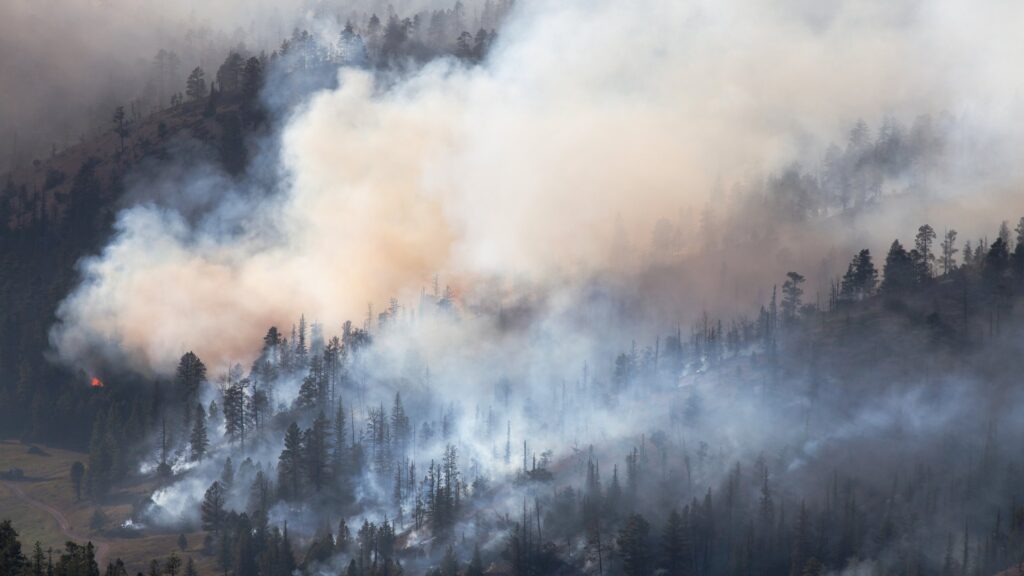
Americans in the upper Midwest and northeast had a summer filled with wildfire smoke. Smoke over Lake Michigan was so thick at times that it caused maritime warnings for boaters due to visibility.
Much of the smoke was from Canadian wildfires blowing south and east, but wildfires in the American West, parts of Europe, and around the world are increasingly severe. All that smoke, just in North America alone, has eaten through nearly all the prior gains we’ve made in the US through tailpipe emission reductions and industrial pollution reductions.
Just as climate change is intensifying hurricanes, tornadoes, and storms, forest fires are burning more intensely as well. Out-of-control wildfires mean it’s not “just” soot and ash that’s released from burning leaves and pinecones, but also chemicals, carcinogens, and other hazardous materials as fires engulf cars, homes, and businesses.
The combination of extra pollutants with hazardous materials forms a vicious cycle of increased atmospheric warming, leading to more extreme weather, droughts, and fires.
The results are as many as 70,000 excess human deaths each year, just from smoke exposure. Wildlife deaths are largely unknowable. Plus, those excess deaths don’t include the millions of deaths from all the other climate-change-related droughts, famines, crop failures, floods, storms, and extreme heat.
Better forest management leads to two big improvements in the world’s atmosphere
First, trees store and capture carbon dioxide from the atmosphere and hold onto it, but only so long as the tree is still wood. Once a tree ignites, the stored carbon is released into the air. It’s a bit of a simplification, but it’s estimated that some 861 gigatons of carbon are stored in the Earth’s forests. All that carbon has to go somewhere, either in our lungs, food, or water.
For comparison, the earth’s oceans hold somewhere around 38,000 gigatons of carbon, which is 50 times more carbon than that in the atmosphere and 20 times more carbon than that held by plants, animals, and the soil. We’re putting a lot of strain on the oceans to sequester a lot of pollution, and they can only hold so much before they stop storing more.
Reducing wildfires means reducing the amount of excess smoke in our lungs, our oceans, and thus our food supply. It also means that more forests remain healthy and are maintained to their maximum use. Good forestry recognizes ways to coexist with forests, allowing us to maintain — or even increase — global forest carbon sequestration.
Second, forest management puts trees to use in ways that can be more beneficial to humans. Much of our global problem with forestry is no one wants to see forests cut down. The images of falling trees seem bad, and they can be! But trees have a lifespan and well-managed forests don’t reveal large swaths of stumps in a now clear-cut field.
Left totally to nature, trees will eventually die, collapse, and rot. This isn’t a bad thing in itself, but humans have intervened in ways to extinguish fires and keep them away from communities. We’ve impeded nature’s natural cycle of renewal by trying to stop it in some places, like in southern Canada and California. And we weed or poison out low-value Aspen trees, but Aspen trees are a natural firebreak. We have some work to do in our forest management practices, but we know how to do it well. We know how to manage forests so they’re robust, not clear-cut, and diminish some wildfire risks.
If humans did not exist on Earth, nature would clear its own forests on its own time with little risk of unmanageable harm. But because we also pump carbon into the atmosphere through cars, air conditioners, agriculture, and more, it’s hard for nature to manage the excess between intense fires and human activities.
Good forestry practices ensure we remove trees at predictable rates and lifespans, and plant trees in diverse and ecologically sustainable ways. Trees that have been removed continue to store carbon while the lumber is used to build houses, cabinets, desks, tables, chairs, wooden toys, and more.
All wood products are actively storing carbon and keeping it out of our lungs, food, and land. It’s hard to argue against lowering the cost of building housing and keeping people employed.
Additionally, we possess the expertise to coexist safely with forests without continually battling fires seemingly forever. Humans aren’t very good at stopping large wildfires. Like in Canada this year, most of the time we can only let fires burn themselves out, which it would have done in smaller increments over longer, more manageable periods of time on its own anyway.
It’s time to change the narrative about forest management. Lumbering and timber can be a lucrative industry, yes. And it can also help us put wood to use before it literally goes up in flames, harming us all.