
Canada reported 3.315 million hectares have burned in 2026 so far as of July 23, 2026. That’s from about 900 active fires in late July. Estimates are hard to pin down, but that’s somewhere between 46 and 179 million tons of carbon.
As of this writing, the U.S. Trump Administration finds itself in bi-partisan agreement with some Democratic lawmakers in asking Canada to get their smoke under control.The Trump Administration is looking to tariffs as a form of carrot-or-mostly-stick punishment.
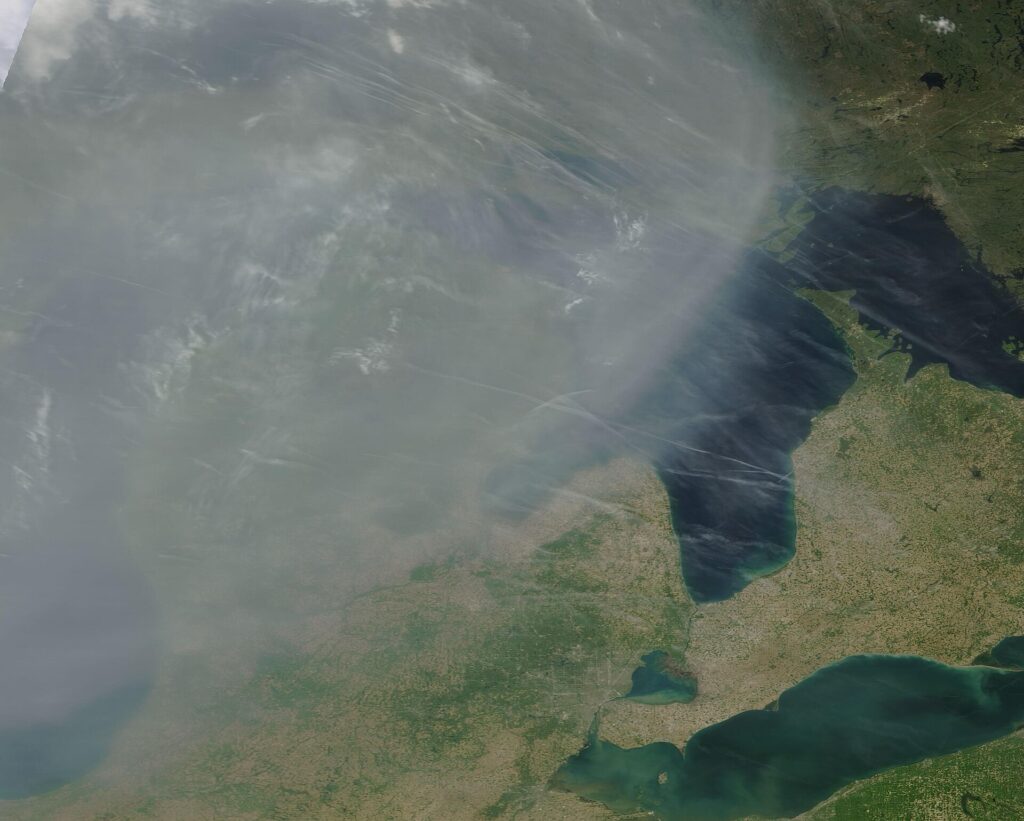
Politics is always full of missing nuance, and you can be forgiven thinking it silly that Canada has some magic knob to turn the burner down on its fires. But, fire suppression policies, changing weather, and Canada’s conifer silviculture have had substantial impact on forest fires.
The three ingredients to Canada’s wildfires
There are three primary ingredients impacting Canada’s recent wildfire severity.
Ingredient 1
A hotter, less predictable climate
Shifting snowmelt, rainfall, heat and wind are making fire seasons longer and more intense.
Read more ↓Ingredient 2
What gets replanted
Forestry that favors marketable conifers over aspen and mixedwoods strips out natural firebreaks.
Read more ↓Ingredient 3
How fires are fought
Putting out every fire near people lets fuel build until remote fires outgrow any response.
Read more ↓Climate changes and weather variability
The amount of snowmelt, variations in rainfall, heat, wind, and atmospheric conditions are changing Canada’s wildfires. Studies aren’t available yet for the present 2026 fire year, but some studies exist from Quebec’s 2023 fire season. Researchers estimated in 2022-2023 that changing climate has resulted in 50% more intense fires and the likelihood any one season is more severe than average is 7x higher.
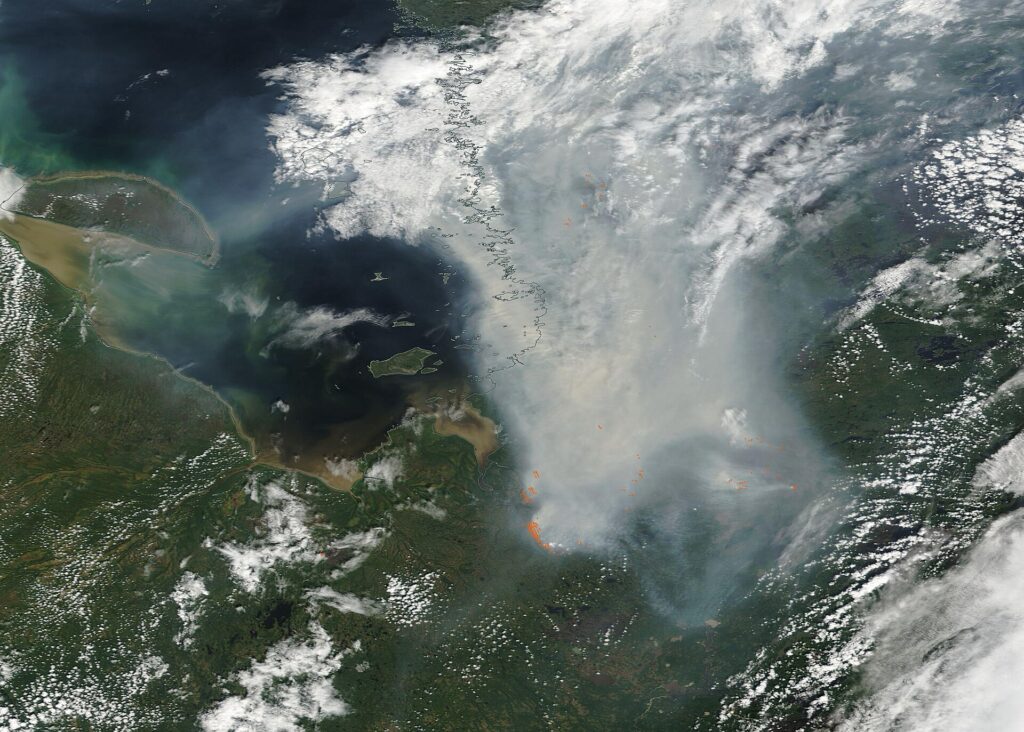
All to say: fire seasons are getting longer, more severe, and frequently have more intensity than ever before.
Aspen and mixedwoods are supressed in favor of more “valuable” conifers
Market forces dictate that timber from marketable trees are more valuable than those that aren’t as useful for commercial goods. Trees like the broadleaf aspen variety are less commercially valuable. However, they’re also more fire-resistant.
Coupled with “landscape heterogeneity”, or “business prefers predictable, similar-looking plantings and forests.” Those replanted forests include almost no aspens and other trees that “do nothing else” other than serve as natural fire breaks. In some forests, Canada has permitted herbicides to remove strands of trees deemed less fiscally valuable.
The result can be a younger and more uniform conifer-dominated stand where a naturally regenerating forest might have contained a patchwork of aspen, birch, spruce, pine, wetlands and open areas. Heterogeneity matters because a fire moving across a varied landscape repeatedly encounters different fuel conditions. A uniform landscape can give it a more continuous path.
Interactive
Light a fire in a boreal forest
Set how much of the stand is aspen and other broadleaf trees, then strike lightning on the left edge and watch how far the fire runs.
A simplified illustration, not a scientific fire model. Conifers pass fire to their neighbours far more readily than leafed-out aspen, which roughly mirrors the fuel differences described in this article.
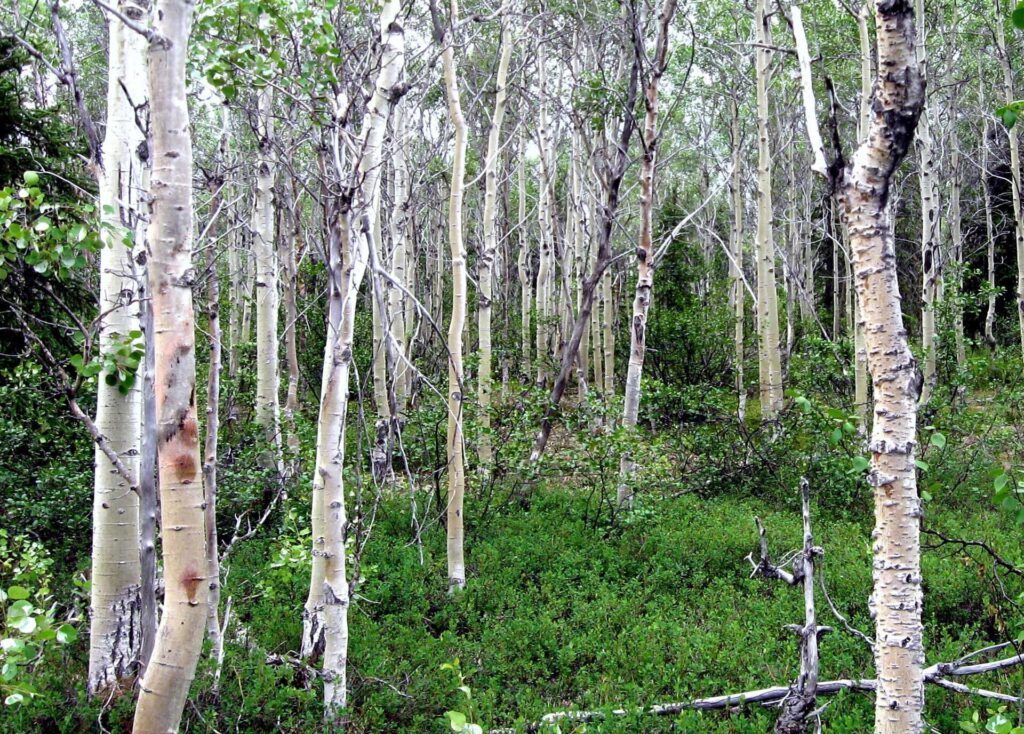
Healthy aspen stands can be less conducive to intense fire than many spruce- or pine-dominated stands, particularly after their leaves emerge. Aspen leaves contain relatively little resin and remain moist during the growing season. Aspen stands also tend to have fewer low branches connecting surface fire to the treetops, less dead woody fuel and a cooler, shadier understory. These characteristics can slow fire, reduce its intensity or make it less likely to move into the crowns.
This does not make aspen fireproof. Aspen stands can burn during extreme drought, and they are more combustible before their leaves emerge in spring and after leaf fall in autumn. Canada’s fire-behaviour system treats leafless aspen as a distinct fuel type for precisely this reason.
Conifer forests, by comparison, can contain resinous needles, persistent dead branches, dense crowns and deep layers of slowly decomposing needles, moss and organic soil. These features may help a surface fire climb into the canopy and allow a crown fire to spread between trees. Fire behaviour still depends heavily on species, forest age, drought, wind and soil moisture; “conifer” does not automatically mean “highly flammable.”
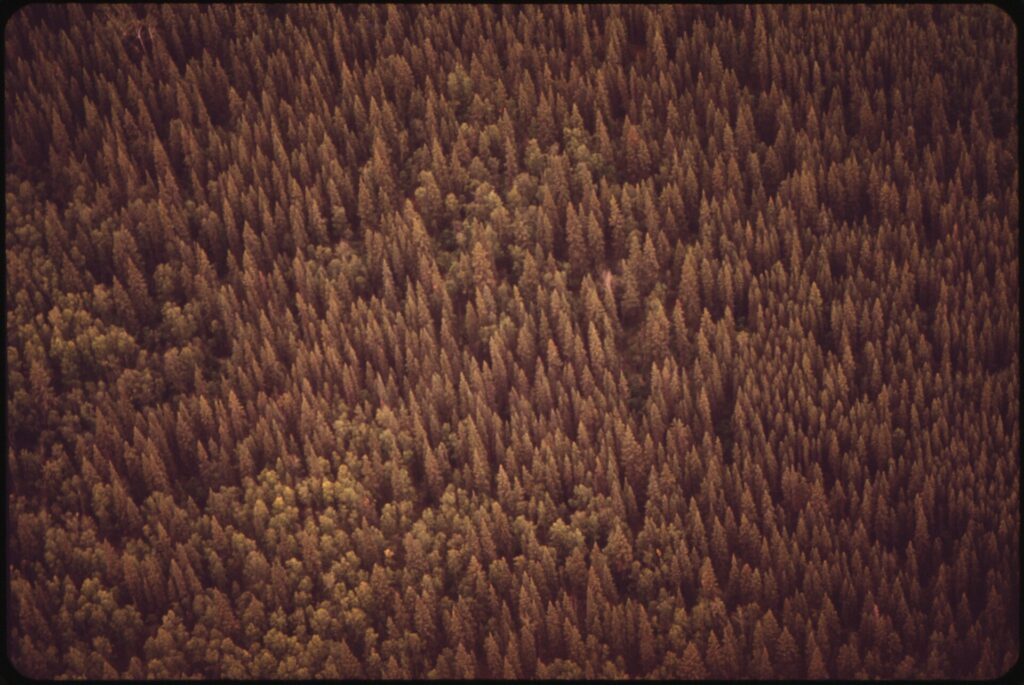
Some boreal conifers are also adapted to fire, but that is different from being resistant to fire. Jack pine, for example, may carry tightly sealed cones that only open under intense heat and release seeds after a fire. The adult tree may be killed, but the species is well equipped to recolonize the burned land. The U.S. Forest Service notes that, somewhat paradoxically, jack pine is easily destroyed by fire despite its reproductive adaptation that relies on it.
A recent Nature Climate Change study estimated that a deciduous boreal forest loses, on average, less than half as much carbon per burned hectare as a conifer forest. Canadian fire-carbon modelling likewise finds that older conifer-dominated stands burn more readily than adjacent deciduous or mixed stands
Quick primer
Forest types, briefly explained
You might be wondering what some of the terms mean, like conifer, deciduous, broadleaf, and mixedwood.
A boreal forest is just any cold, northern forest (as opposed to a jungle). Canada has them, as does Russia, Alaska, and Scandinavia. Within Canada's boreal forests have three kinds of stands:
Conifer-dominated forest contains mostly needle-bearing trees, including black spruce, white spruce, jack pine and balsam fir. Most remain green throughout the year, although tamarack is a conifer that drops its needles.
Deciduous-dominated forest contains mostly broadleaf trees such as trembling aspen, balsam poplar and birch. These trees drop their leaves in autumn. Aspen is therefore both deciduous and broadleaf.
Mixedwood forest contains substantial amounts of both groups—for example, aspen and birch growing alongside spruce, pine or fir.
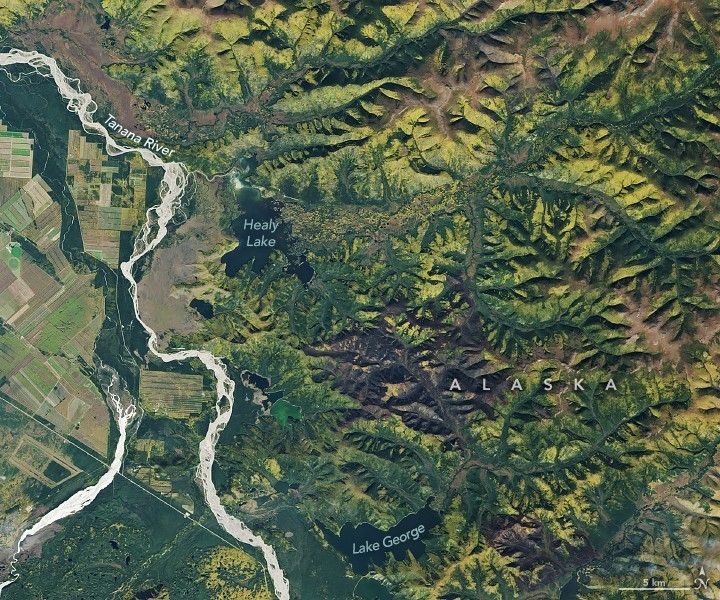
Canadian boreal forest is not completely unlike anything in the lower 48 states. Smaller boreal and boreal-transition ecosystems occur along the Canadian border and in northern Minnesota, Wisconsin, Michigan, Maine and mountainous areas of the Northeast. However, the closest large-scale American comparison is the taiga of interior Alaska. Americans might picture Canada’s boreal forest as a vastly expanded, colder version of the spruce, fir, pine, birch and aspen country found around the northern Great Lakes—not as Pacific Northwest rainforest or a typical oak-and-maple forest.
Fire suppression changes in Canada are just like the U.S.
In an effort to protect people and property, Canada's wildfire suppression looks a lot like the U.S.: keep it at bay, do controlled burns but only when it seems there's zero risk to people, and continue to develop land abutting forests because it's more valuable for wealthy estates. And like the U.S., where states are mostly in charge of the lands in their jurisdictions, Canadian provinces have jurisdiction over their lands, which results in a mix of priorities and interests that sometimes don't neatly align border-to-border.
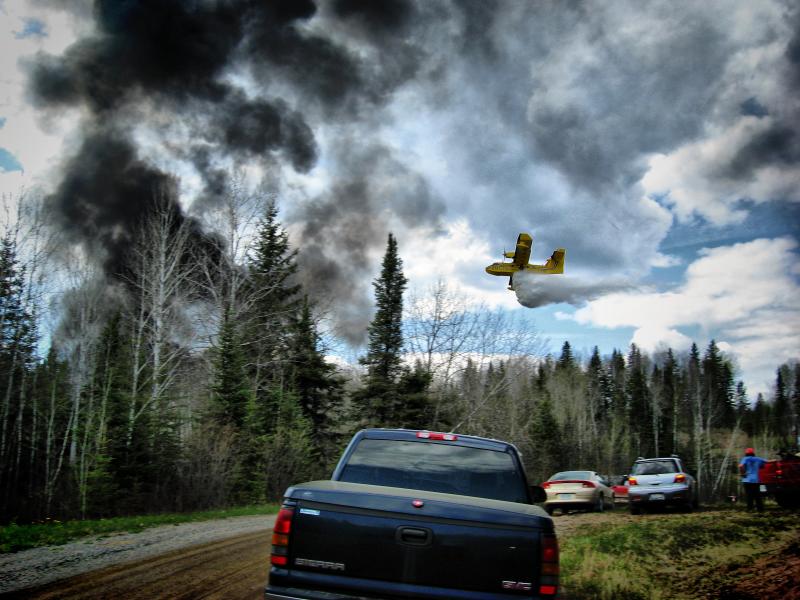
Left alone, the earth would let fires work through forests as part of a natural regeneration. But when fires start near populated places, the response from people is to extinguish the fire. You can do that for small fires, but in vast remote sections of Canada you eventually can't match the scale necessary to suppress every fire. As a result, strategic suppression and fuel management continue to prioritze protecting people and property, but eventually it all spirals out of control into larger and more intense megafires.
To some extent, yes, all of this can be somewhat preventable
We know humans have a significant impact on the world.
- We could manage forests and reduce the loss of aspens and other fire-resistant trees.
- We could target thinning and prescribed or cultural burning.
- We could proactively reduce climate impact, which had been on the upswing but the use of energy-hungry and thirsty data centers is making it more difficult for the largest companies in the world to meet climate goals.
- We could provide large-scale, landscape-scale heat sinks by protecting wetlands, which are often regarded as ugly or better used as developed land.
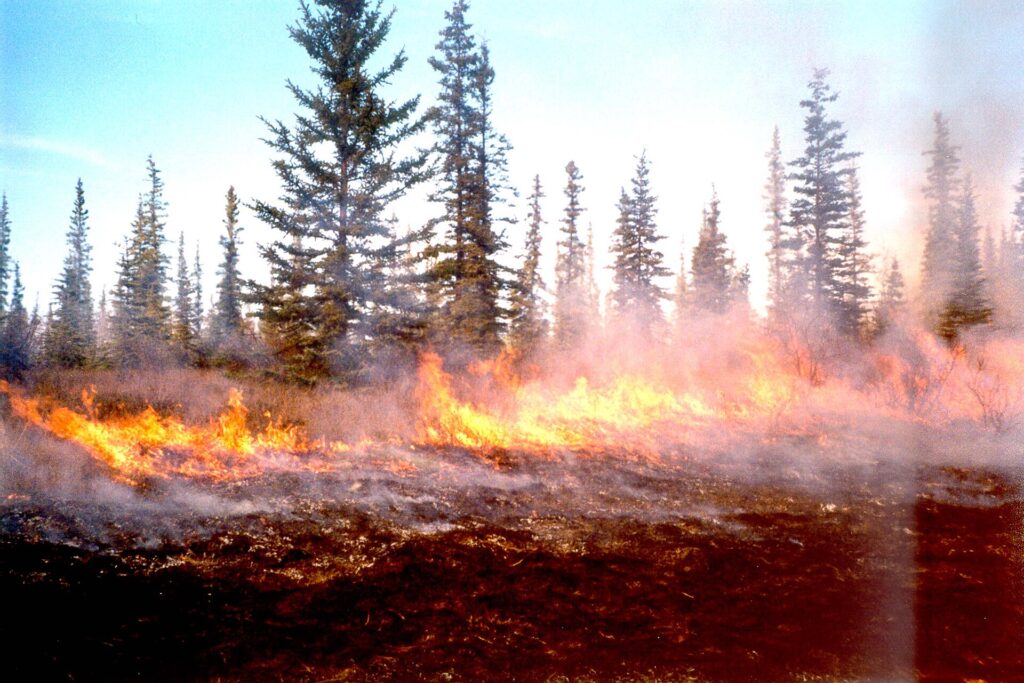
No people can ever make the world nonflammable. Lightning, natural droughts, wind, seriously remote fires, and people playing with matches are likely to always be with us.
Canada's 2026 wildfires, as of July anyway, have conservatively released 46 million tons of carbon. A typical passenger car in North America releases about 4.6 metric tons per year. At 46 million, that's 37 million cars, or all of New York City's drivers' annual carbon output for the next 18 years combined.
Interactive
Put the smoke in perspective
Estimates of the carbon released by Canada's 2026 fires so far range from about 46 to 179 million tons. Slide between them to see what that means in cars on the road.
Each car icon represents one million passenger cars driven for a year.
Carbon is converted to carbon dioxide at 44/12 (about 3.67 tons of CO₂ per ton of carbon). Car figures use the U.S. EPA's estimate of about 4.6 metric tons of CO₂ per typical passenger vehicle per year (EPA).