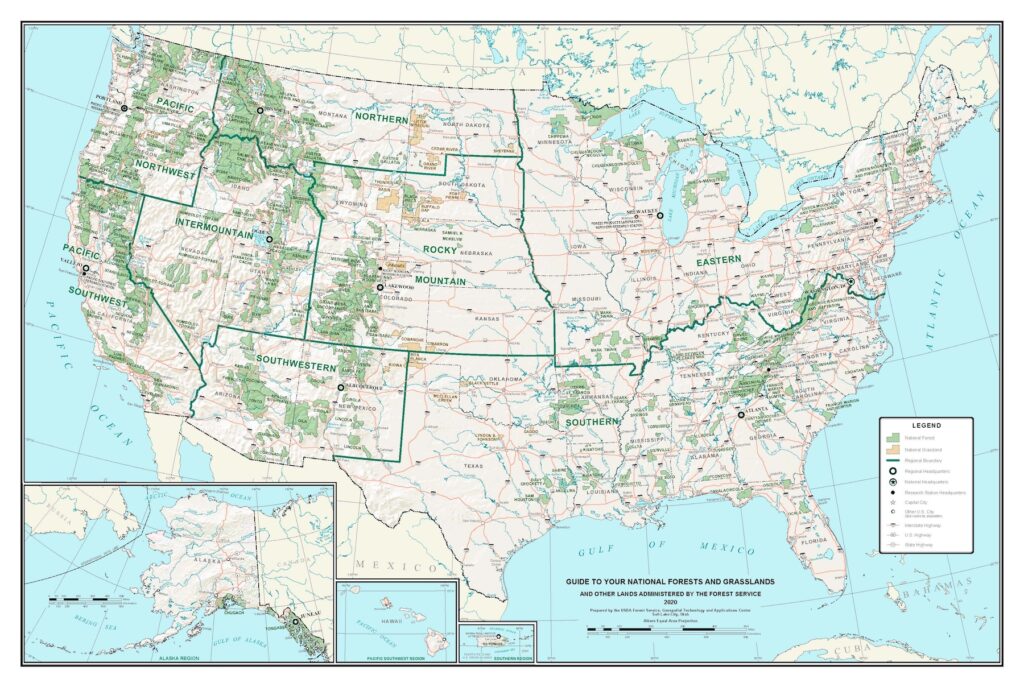
Map of national forests and national grasslands of the United States
Before 1990, larger timber and clear-cutting interests dominated the landscape. Much has changed as policies have shifted and so have consumer demands. Paper products, which prefer lower-grade and smaller-diameter trees, have declined. Digital notebooks, emails, and even automatic hand dryers have done more to reduce paper demands and logging than most policies ever could.
Left completely alone, North American forests would largely manage themselves. However, they might not be as efficient. Like cutting our hair or nails, our bodies work best with a little care, and humans can have a significant, positive impact on the health of forests when done well.
It is absolutely true that, when measured across millions of acres and millions of years, nature finds a way. But humans have a justifiable interest in preserving human life from forest fires. And even the most ardent environmentalists would be as hard-pressed as a paper towel to favor steel or plastic for building homes over renewable, carbon-storing timber.
Recognizing we need wood products, which requires a sustainable industry and employment in logging, milling, transportation, and production, we need equally sustainable forest management. That means a healthy, sustainable practice of removing trees. But which ones? And where?
Would you protect, harvest, flag, or snag?
If you were a forester walking through an Oregon forest, how would you manage the growth for maximum efficiency and sustainability?
You would discover trees like:
Douglas Firs, growing for over 200 years
Western Red Cedar, at middle-age with beautiful wood
Western Hemlock, a mature and dominant tree in the understory
Ponderosa Pine, perhaps scarred by prior wildfires
Red Alders, young and growing fast near streams and riverbeds
Bigleaf Maples, housing wildlife in large, aging cavities
You’d also discover millions of living creatures, from insects to birds, salmon, and bears.
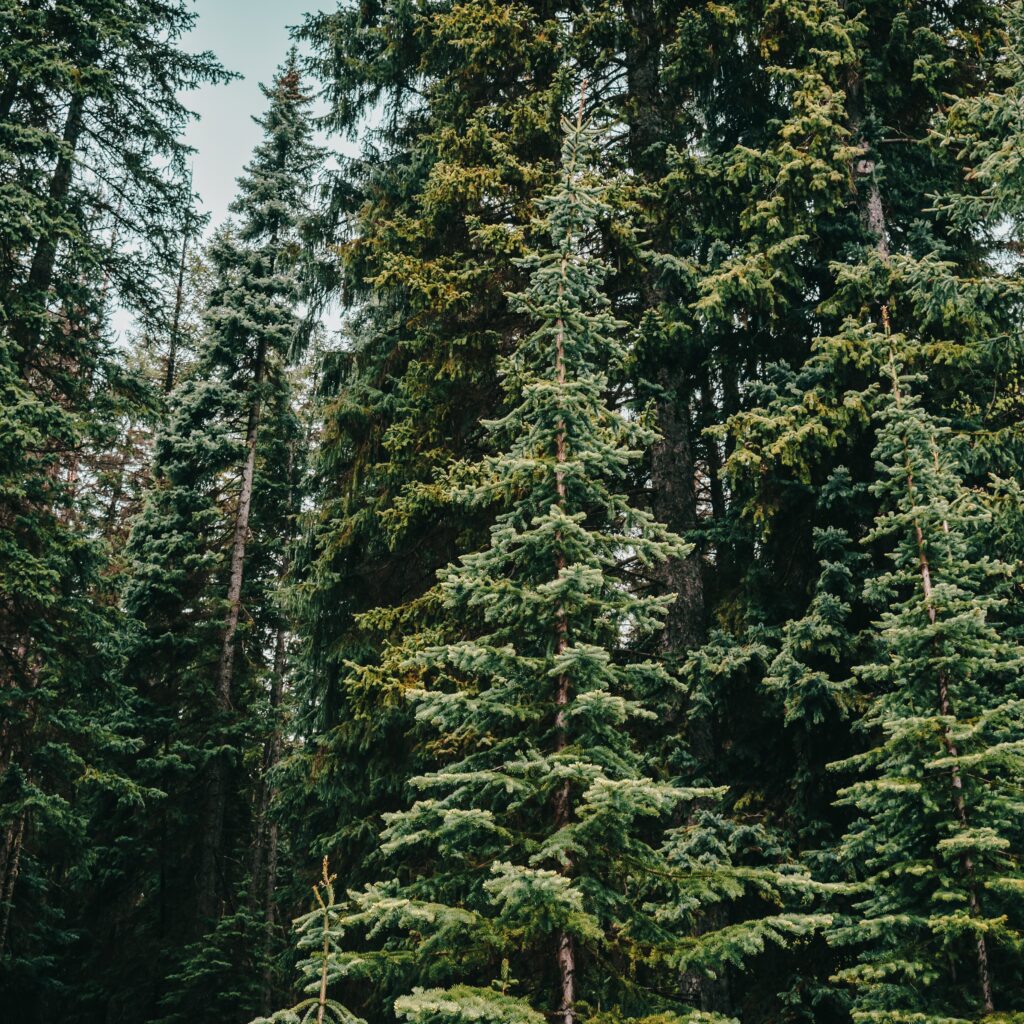
Alpine forest in the mountains of the US Pacific Northwest
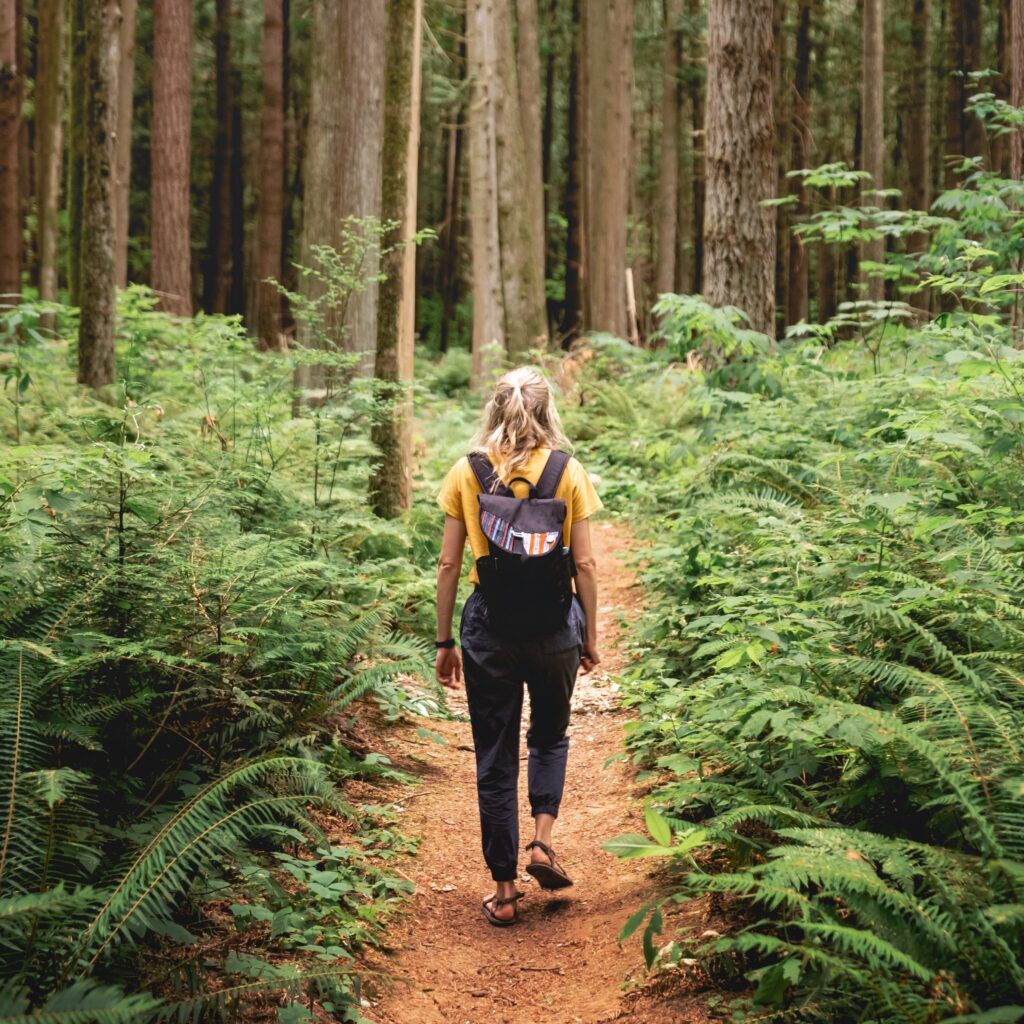
Berthusen Park in Lynden, Washington
When assessing trees, foresters largely consider each tree based on its location, environmental risks (such as disease or boundary concerns), and its economic value. Economic value shifts over time, too. For instance, after the Great Chicago Fire in 1871, demand for wood to rebuild everything from houses to sidewalks surged, and an equally sudden demand for the wood from northern Michigan forests came as a result. This shift in economic demand, sudden or not, results in changing forests.
Today, a consistent decline in paper production has reduced the need for lower-grade trees (often called “paper trees”), which alters the forest by stifling new growth.
As a forester, you have six decisions to make:
Preserve a tree
Harvest a tree for timber
Harvest a tree for pulp/paper
Salvage/snag a tree for use by wildlife or ecological purposes
Thin a tree to help its neighboring trees grow faster
Flag a tree for monitoring, like for disease or invasive species concerns
There’s a balance to be struck between “preserving everything” and “clear-cutting everything.”
drag to pan · scroll to zoom
Remember:
Professionals score based on ecology and economics.
An ancient, old-growth tree can live for hundreds of years. But it will eventually die, and its death results in no economic value.
A tree along a stream holds the land together in floods, preserving the forest downstream.
Removing the “paper trees” helps larger (and, yes, more valuable) trees grow.
An overcrowded forest can’t support new growth, either. The risks are like a population of people who collectively cease having children. Without continual new generations, you risk a lot of problems, including extinction. A society without kids and teenagers would distort the landscape just as a forest without saplings and young trees!