
You can be forgiven for thinking the insatiable demand for commerce and industry to consume natural resources at the lowest cost and highest return means there is nothing we can do that is inherently sustainable. That our inherent self-interest in clean water, clean air, and a pleasantly stable planet is in direct contradiction to the all-mighty dollar. Certainly governments can regulate or pass laws to administer resources. But capitalist forces have examples of self-regulating when paired with a strong sense of identity, self-preservation, and culture.
The tribal forest economy of the Menominee (pronounced like “meh-noh-min-nee”) in northern Wisconsin is a one example. Like a lot of tribes, the Menominee’s overall footprint has been reduced by white settlers since the mid-19th century, when they lived on as much as ten million acres in northern Wisconsin and the Michigan Upper Peninsula. Today, the tribal holdings are around 235,000 acres. Of that, 220,000 is forested.
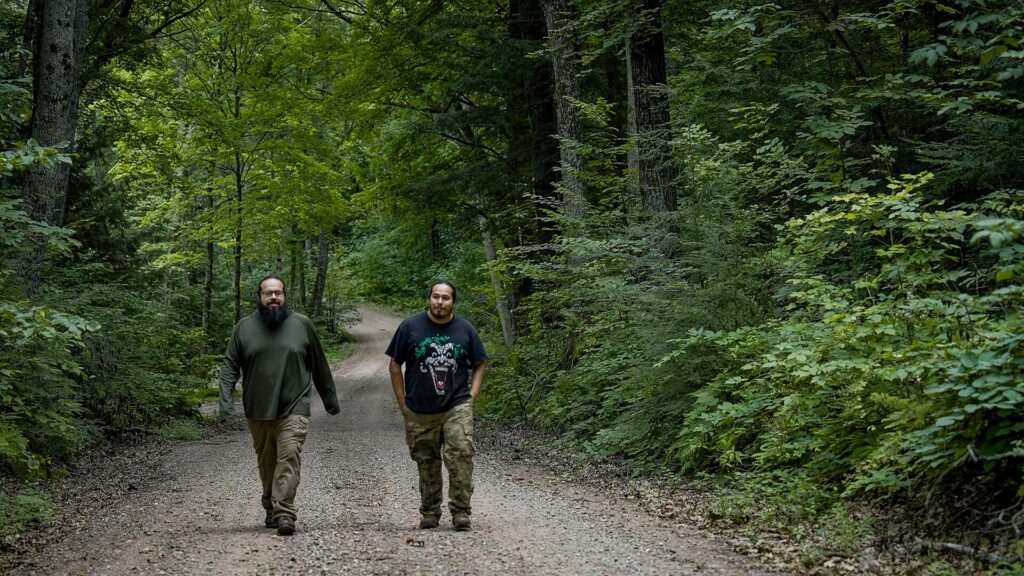
Certainly early tribal residents lived off the land, hunting and fishing, farming, and consuming what they needed as they needed it. Leaders understood that if they were to continue living at all under white land ownership rules, they would have to largely give up their life of hunting and gathering to make timber their primary staple. Timber, it was believed, could sustain the tribe with cash.
So in 1854, the Menominee began logging, but only after they set boundaries and limits to ensure neither the original nature of the forest, nor its original productive capacity, would be destroyed by the work. Now, nearly 175 years later, the forest management techniques are much more sophisticated. But the root of the culture, a sense of value of the land, and an understanding of natural limits remains.
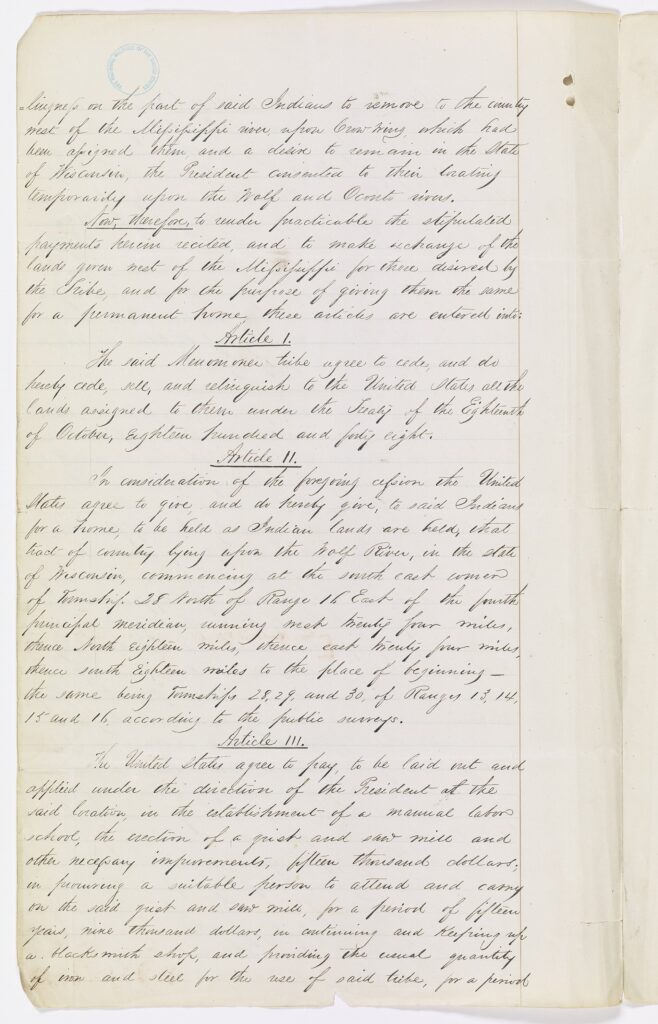
In 1854, when logging began, the forest was estimated to contain about 1.5 billion board feet of standing timber. For the first decade or so, no records exist, but we know in the 123 years from 1865 to 1988, the forest yielded 2 billion board feet. It’s believed the forest continues to contain about 1.5 billion board feet today, and the average diameter of the trees has been reduced by only half an inch, and that’s by design as the foresters want fewer large hemlocks.
How is it possible a 1.5 billion b.f. forest continues to have 1.5 billion b.f after harvesting 2 billion board feet of wood?
It sounds like a woodchuck chucking wood riddle, but it isn’t.
Some 20% of the forest is managed in even-aged stands of aspen and jack pine, which are harvested by clear-cutting and regenerate naturally. The rest of the forest is divided into 109 smaller compartments. Each compartment is assessed once about every fifteen years to select trees for timber. The rule is simple: “cut the worst, leave the best.” Meaning the loggers remove only the trees unlikely to survive for another fifteen years, either because they’re stunted or defective in some fashion.
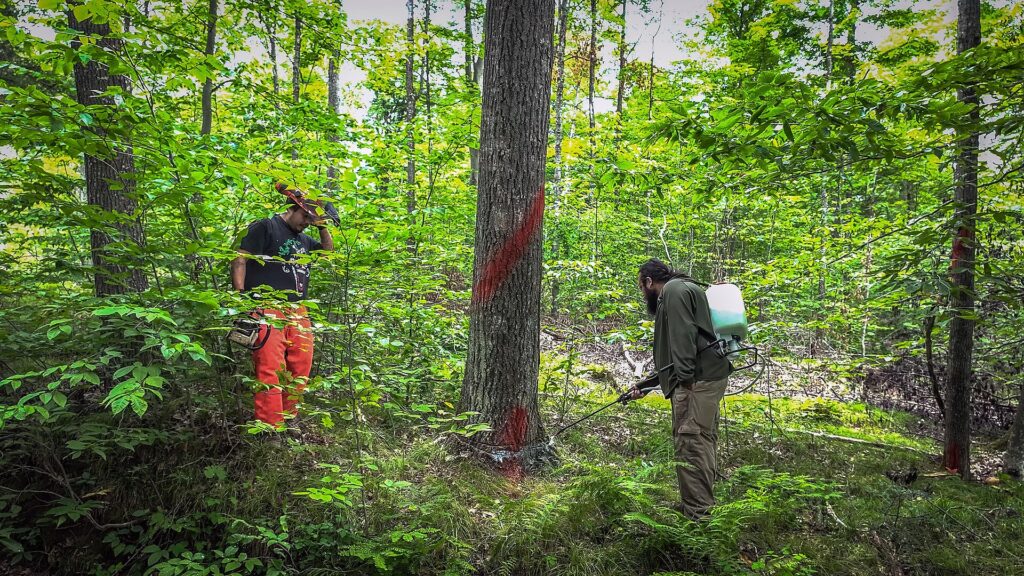
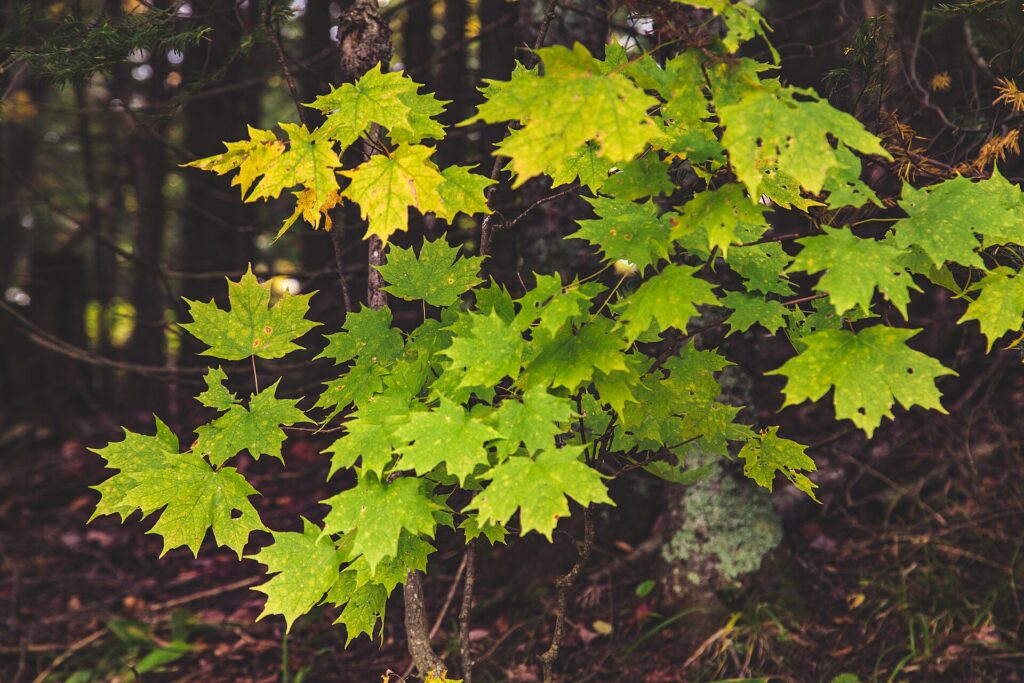
Old trees that are healthy and still growing are left alone, which means the Menominee live in a real “old growth” forest. There are hemlocks as old as 350+ years, and cedars that are probably much older. The average age of harvested maples is 140-180 years.
For perspective, that is old for a maple. Sugar maple typically reaches maturity at around 100 to 120 years, with a usual maximum lifespan of 200 to 300 years, according to the Nova Scotia Department of Natural Resources; the USDA notes exceptional trees can live up to 500. Red maple, the other common maple of the Great Lakes forest, matures in 70 to 80 years and rarely lives beyond 150. In other words, a maple harvested at 140 to 180 years has typically lived well past maturity and through most of its natural lifespan.
To support this highly selective harvesting operation, the forest is constantly studied and evaluated in the way only the people who live there could truly do. Loggers in the forest, some of which are outside contractors or commercial operations separate from the tribe, are heavily regulated and supervised. The tribe requires small skidders and rubber-tires, on permanent skid trails so as to not damage the land or trees. Loggers are even required to undergo training from the tribe before being allowed in.
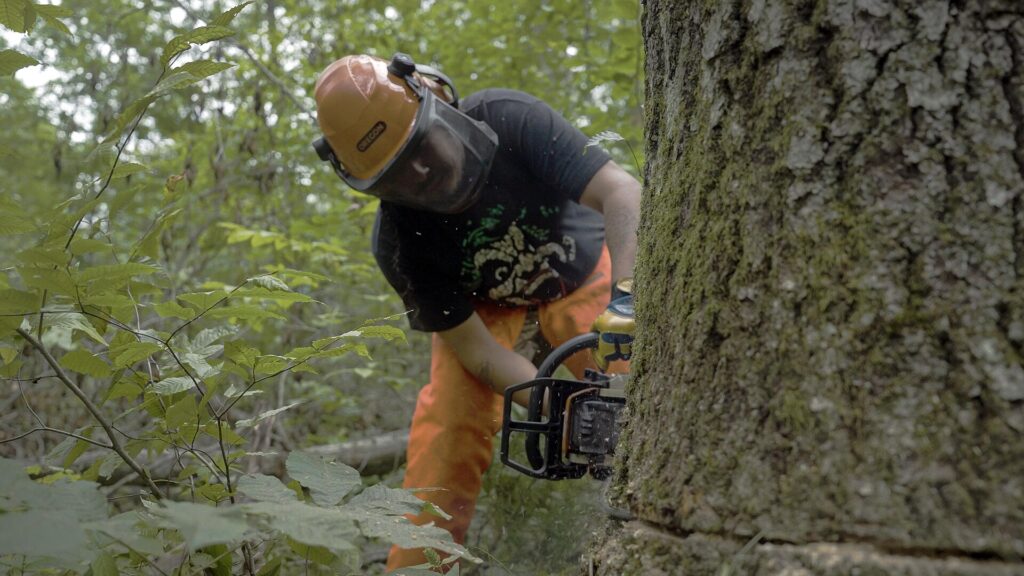
The forest economy employs a couple hundred people, or about 15-20% of the adult population of the reservation. The Menominee recognize such steps aren’t enough, and their economy needs to be much more diverse. The tribe’s lands exports sawed lumber, logs, veneer logs, pulpwood, and specialty woods for paneling and molds.
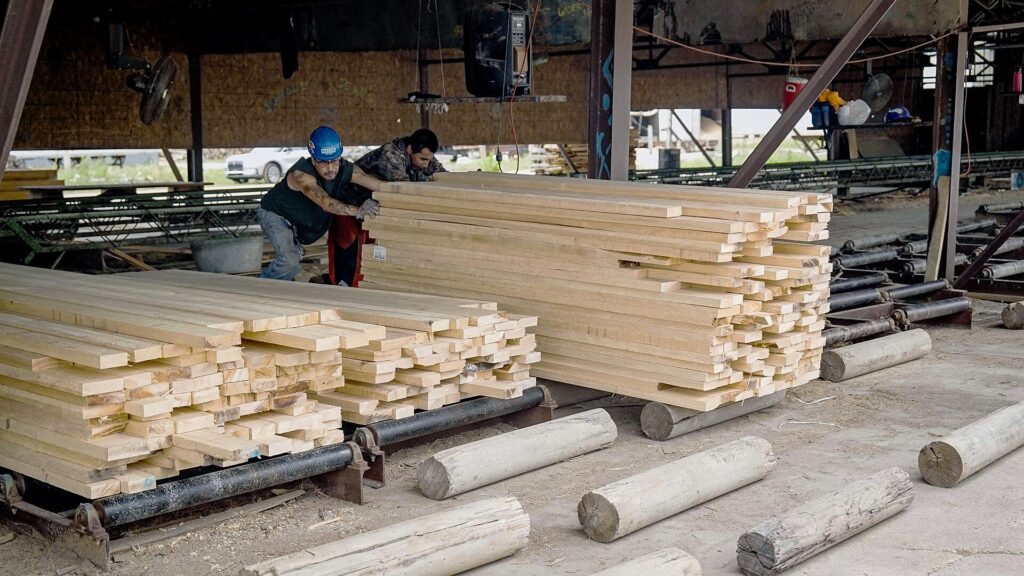
Additional value-add industries are possible, but the tribe recognizes that their forest economy is as successful as it is because it is not understood “only” as “an economy”. It is the basis for their culture and must be respected, on a level akin to respecting elders and other people.
As opposed to a “crop-year economy”, where industrialism grows and harvests monoculture material at wholesale, rapid rates, the Menominee, indeed, have what we can rightly call a “long term economy.” One that is respectful of the generations that came before them and the ones that will come after.
Mixed Mesophytic Forests, Natural Areas Journal 13
Dave McNamara, “Horse Logging at Latour,” California Forestry Notes (Sept. 1983): I-IO.
Scott Landis, “Seventh-Generation Forestry,” Harrowsmith Country Life (Nov./Dec. 1992): 33. I
Marshall Pecore, “Menominee Sustained-Yield Management,” Journal of Forestry (July 1992): 12-16.
Nova Scotia Department of Natural Resources, “Silvics of Sugar Maple,” Woodlot Management Home Study Program.
USDA NRCS, “Sugar Maple, Acer saccharum,” Plant Guide.
University of Maryland Extension, “Native Trees of Maryland: Red Maple.”